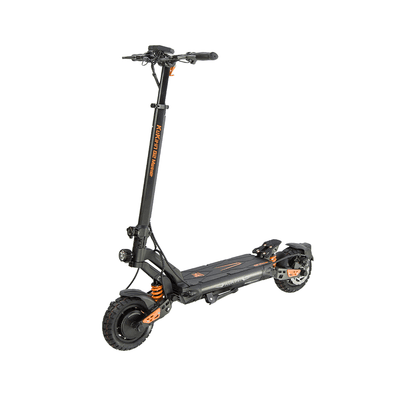
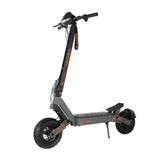
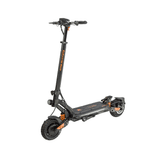
How to Convince Your Parents to Buy You a KuKirin
Short version: do not try to win by saying “everyone has one.” Win by showing that you have thought about the cost, the rules, the route, the helmet, the storage and what happens after the first exciting week.
Start with the question they are actually asking
When a parent says “no” to an electric scooter, they are rarely rejecting the colour or the top speed. They are asking: Will you ride responsibly? Is it legal? Can we afford the whole setup? Where will it be stored? Who deals with a flat tyre? Will this become an expensive object in the hallway?
If your pitch answers those questions before they ask them, the conversation changes completely.
1. Bring a one-page plan, not a 40-tab browser window
Write down:
- the journeys you would actually make each week;
- the exact distance of the longest return trip;
- where the scooter can legally be ridden in your area;
- where it will be locked, stored and charged;
- the scooter, helmet, lock and maintenance budget;
- the model you chose and two sensible alternatives.
“I need a 70 km/h scooter because it is cool” is not a plan. “My regular return trip is 14 km, I have checked the local rules, I can store it in this dry space and this model gives enough battery headroom” is a plan.
2. Choose the model that makes your argument easier
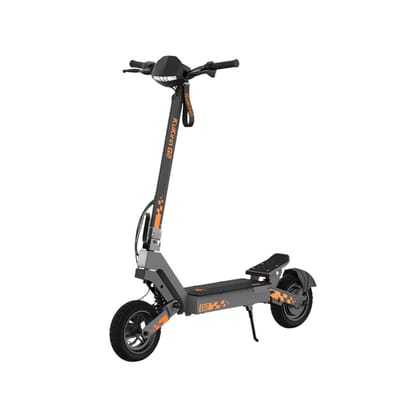
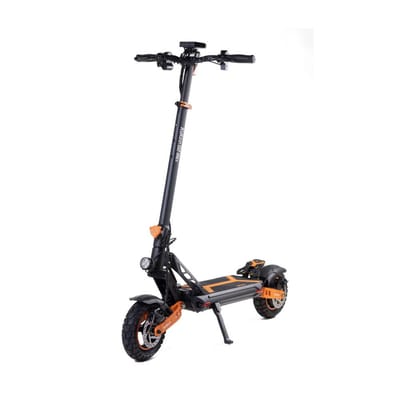
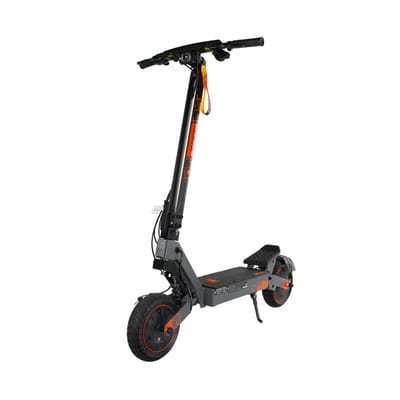
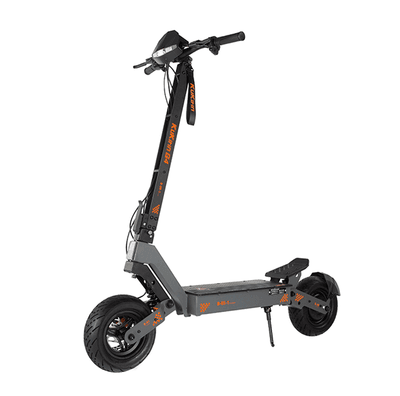
The fastest KuKirin is not automatically the best first KuKirin. A lighter, controlled-speed model can be easier to store, easier to handle and easier to justify. A larger performance model can make sense for an experienced adult rider on private land or an appropriate legal route, but it also demands more space, stronger protective equipment and more disciplined braking.
Use the model comparison and be honest about weight. If there are stairs, imagine carrying the scooter after a long day—not lifting it once in a shop.
3. Put safety in the budget before accessories
A proper helmet is part of the purchase, not a future upgrade. Depending on the model and riding environment, gloves, eye protection and additional protective equipment may also be appropriate. Add a serious lock and visible lighting to the plan.
Offer rules you will follow:
- helmet on every ride;
- no passengers;
- no phone in hand;
- no riding after drinking or taking anything that impairs judgement;
- no speed you cannot stop safely from within the visible road ahead;
- no public-road use until the exact local rules are confirmed.
4. Show that you understand the boring ownership part
Before each ride, tyres, brakes, the folding latch, steering, lights and loose fasteners need a quick check. Pneumatic tyres need the correct pressure. Consumables wear. A wet scooter must not be pressure-washed or charged while wet. A damaged, swollen or unusually hot battery is a stop-and-get-help problem, not a DIY experiment.
Tell your parents which checks you will do and how often. If you cannot commit to five minutes of maintenance, you are not ready for the machine.
5. Offer to pay a meaningful part
You do not necessarily need to pay for everything, but contributing changes the conversation. Save a fixed amount, take on an agreed job, or ask for the scooter to cover more than one birthday or holiday. Include the helmet and lock in your savings target.
Avoid secret discount-code maths or a price copied from an old article. Use the current price displayed on the product page in your selected country and currency.
6. Suggest a parent test—not an instant purchase
Ask them to review the comparison with you. Measure the storage space together. Walk the planned route. Check the current transport authority page together. If there is a safe, legal opportunity to try an appropriate scooter, let them feel the weight and braking.
Turning “buy it now” into “help me verify this plan” removes pressure and gives them a real role in the decision.
7. Accept that “not yet” can be a responsible answer
Age rules, local law, budget, storage or route conditions can make a purchase wrong today. Agree on what would need to change: reaching the legal age, saving a target amount, completing a cycling-safety course, finding secure storage or choosing a controlled-speed model.
Handling a “not yet” calmly may be the strongest proof that you are ready later.
The pitch you can actually use
“I am not asking you to decide from a top-speed video. I mapped the routes I would use, checked the local rules, included a helmet and lock in the budget, and chose models that fit our storage space. Can we go through the plan together and decide what would make you comfortable?”
Now choose from facts, not hype
Start with Which KuKirin is yours?, then place your shortlist side by side in the 15-model comparison. If the legal classification is unclear, check the current national or local authority before ordering.
Manufacturer speed and range figures are maximums under test conditions. Actual performance varies with rider weight, mode, terrain, gradients, tyre condition, temperature, wind and battery condition. This article is general safety and buying information, not legal advice.